Educational Overview for Ohio Parents (Informational Only)
By Andrew Russ, Ohio Father’s Rights Attorney
Note: This document is for general, educational purposes only. It does not provide legal advice and does not create an attorney–client relationship. Families’ circumstances vary widely; use the ideas here as neutral, practical examples you can adapt to your situation.
1) Plain-English Terms People Commonly Use
These short summaries reflect how many families describe their own approaches; they are not rules or prescriptions:
• Co-parenting (informal term): Parents coordinate routines and decisions collaboratively, often using shared calendars, regular check-ins, and flexible swaps when it helps the child.
• Parallel parenting (informal term): Parents minimize direct interaction to reduce conflict. Each household runs day-to-day routines independently, with necessary information conveyed through structured channels (e.g., a parenting-communication app) and brief, factual updates.

2) Signals Families Often Notice When Choosing a Framework
Families sometimes shift between models over time. Here are neutral indicators people often consider when deciding how to communicate:
• Volume of conflict: If back-and-forth messages regularly escalate, families may shift toward more structured, low-contact methods.
• Reliability of exchanges: If hand-offs are tense, families may standardize locations, timing, and written confirmations.
• Child-focused routines: If children are thriving with consistent routines, families often keep what works and limit unnecessary changes.
• Documentation needs: If families need clearer records, they may centralize messages and calendars to keep a clean history.

3) Communication Channels Parents Commonly Use
Families pick tools that match their conflict level and tech comfort. Popular options include:
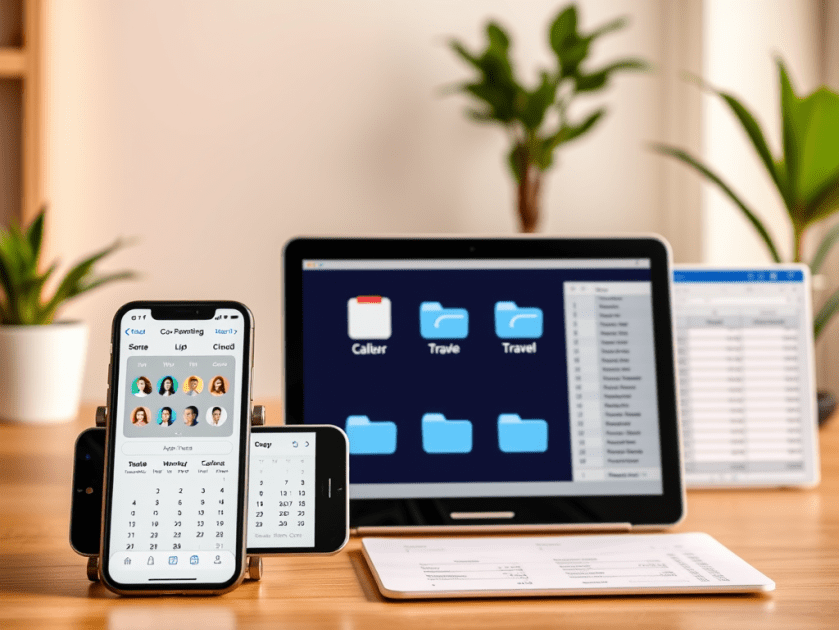
• Co-parenting apps (e.g., OurFamilyWizard, TalkingParents): Time-stamped messages, shared calendars, and file areas.
• Email with clear subject lines: For concise updates and attachments (e.g., school flyers).
• Shared calendars (Google/Apple/Outlook): Events titled clearly (e.g., “Math Club – 4:30–5:30, pickup at east door”).
• Photo/document folders: Organized by year/month so both homes can find items (report cards, itineraries, medical after-visit summaries).
4) Copy-and-Paste Message Templates (Neutral Tone)
A) Swap Request (Non-Urgent):
Subject/Topic: Swap request – [Date]
Message: “Requesting to swap [Your Day, Date] for [Other Day, Date] due to [reason].
Proposed makeup: [Date/Time].
Reply by: [Date/Time]. Thanks for letting me know.”
B) Delay/Traffic Notice (Day-Of):
Subject/Topic: Running late – [Location/Time]
Message: “Running approximately [X] minutes behind due to [traffic/weather]. Updated ETA: [Time]. I’ll confirm on arrival.”
C) Missed Time – Proposed Make-Up:
Subject/Topic: Make-up time proposal – [Dates]
Message: “We missed [X hours/overnights] on [Date] because [reason]. Proposing make-up: [Date/Time range]. Please confirm by [Date].”
D) Medical/School Update (Brief & Factual):
Subject/Topic: Update – [Appointment/Meeting]
Message: “Today’s [appointment/meeting] summary: [one-sentence outcome].
Attachments: [After-visit summary/teacher note]. Next steps (if any): [Date/Task].”
E) Travel Itinerary Share:
Subject/Topic: Travel details – [Dates/City]
Message: “Itinerary attached: flights/lodging/contacts. Emergency contact: [Name/Number]. Returns [Date/Time].”
F) Monthly Recap (Optional):
Subject/Topic: Monthly recap – [Month]
Message: “Highlights: [3–5 bullets].
Schedule notes next month: [bullets].
Open items: [bullets].”
5) Documentation Habits Many Families Find Useful
• Consistent Exchanges: same location(s), clear curbside spots, brief hand-offs.
• Confirmation: after any voice call or in-person chat, a short summary message.
• Proof of Time: calendar entries, screenshots, airline confirmations, camp registrations.
• Organization of School/Medical Items: after-visit summaries, permission slips, and portal printouts in a shared folder.
• Neutral File Names
6) A Calm Escalation Ladder (Process, Not Pressure)
Families often try a step-by-step approach to keep communication predictable
7) How This Fits Your Routine Logistics
These frameworks plug into the planning posts you may already use:
• Exchanges & Neutral Locations
• Winter Weather & Make-Up Time
• Long-Distance & Virtual Time
• School/Medical Decisions

8) Quick Checklists
A) Weekly Communication Sweep
□ Calendar up to date (activities, pickups, tutoring)
□ One message with key changes (dates, times, locations)
□ Save any receipts/confirmations (sports fees, field trips)
B) Exchange Day Kit
□ Weather-appropriate clothing
□ Homework/device/charger
□ Medication/instructions (if any)
□ Simple note about next hand-off (date/time/place)
C) Monthly File Refresh
□ School reports/portal printouts
□ Medical after-visit summaries
□ Files (YYYY-MM-DD_Description)
9) Short, Neutral FAQs (Not Legal Advice)
• Winter Weather & Parenting Time – delays, make-up time, communication.
• Long-Distance & Virtual Time – travel itineraries, call schedules, shared calendars.
• School Choice & Medical Decisions – sharing portals and after-visit summaries.

How Andrew Russ Advocates for Ohio Fathers
- Clear strategy from day one: We map the custody/visitation path that fits your goals and facts.
- Focused evidence development: We identify the proof that matters—and cut what doesn’t.
- Negotiation + litigation readiness: Many cases resolve with strong parenting plans; we’re prepared to try your case when necessary.
- Local insight: Familiarity with Ohio courts and procedures helps us move efficiently and effectively.
Call Now:
Ready to take the next step? Schedule a strategy session with Andrew Russ, Ohio Family Law Attorney. Call (614) 907-1296 or complete our quick online consultation form to get started. Evening and virtual appointments available.

Legal Sources on Parenting Issues:
- Ohio allocation of parental rights & shared parenting (R.C. 3109.04). (Ohio Laws)
- Parenting time statute and scheduling (R.C. 3109.051). (Ohio Laws)
- Presumptions and establishment of paternity (R.C. 3111.03). (Ohio Laws)
- Paternity acknowledgment routes (Ohio Centralized Paternity Registry). (ODJFS)
- Child support worksheet and definitions (R.C. 3119.022; 3119.01). (Ohio Laws)
andrewrusslaw.com Blog:
- Mediation, Settlement, and Negotiation in an Ohio Divorce
- Property Division in an Ohio Divorce
- Dissolution of Marriage in Ohio
- Spousal Support in Ohio Divorce Cases
- Modification of Spousal Support by Ohio Courts
- How Ohio Courts Calculate Child Support
- Modification of Child Support in Ohio
- Role of the Guardian Ad Litem in Ohio Custody and Divorce
- The UCCJEA in Ohio Courts
- Ohio Juvenile Law and Procedure
Disclaimer: This article provides general information and is not legal advice. Legal outcomes vary by facts and jurisdiction. Consult an attorney about your specific situation.
LINKS:
https://www.andrewrusslaw.com/
https://share.google/jt5uwH1ApFQIzrRdU
https://maps.app.goo.gl/XGHud9PfpxUR7hmJA
https://www.andrewrusslaw.com/contact
https://buckeyefatherslaw.com/
https://www.yelp.com/biz/buckeye-fathers-law-pickerington
https://www.andrewrusslaw.com/in-person-representation
https://www.andrewrusslaw.com/team
https://www.andrewrusslaw.com/blog
https://www.andrewrusslaw.com/about-1
https://www.supremecourt.ohio.gov/
https://codes.ohio.gov/ohio-revised-code
https://www.co.athensoh.org/departments/domestic_relations_division.php
Disclaimer: The blog and articles provide general educational information, are not legal advice, and do not create an attorney/client relationship. Legal outcomes vary by facts and jurisdiction. Consult an attorney about your specific situation.
© Andrew Russ Law, LLC • Educational content only • Columbus & Athens, Ohio

 Andrew Russ Law